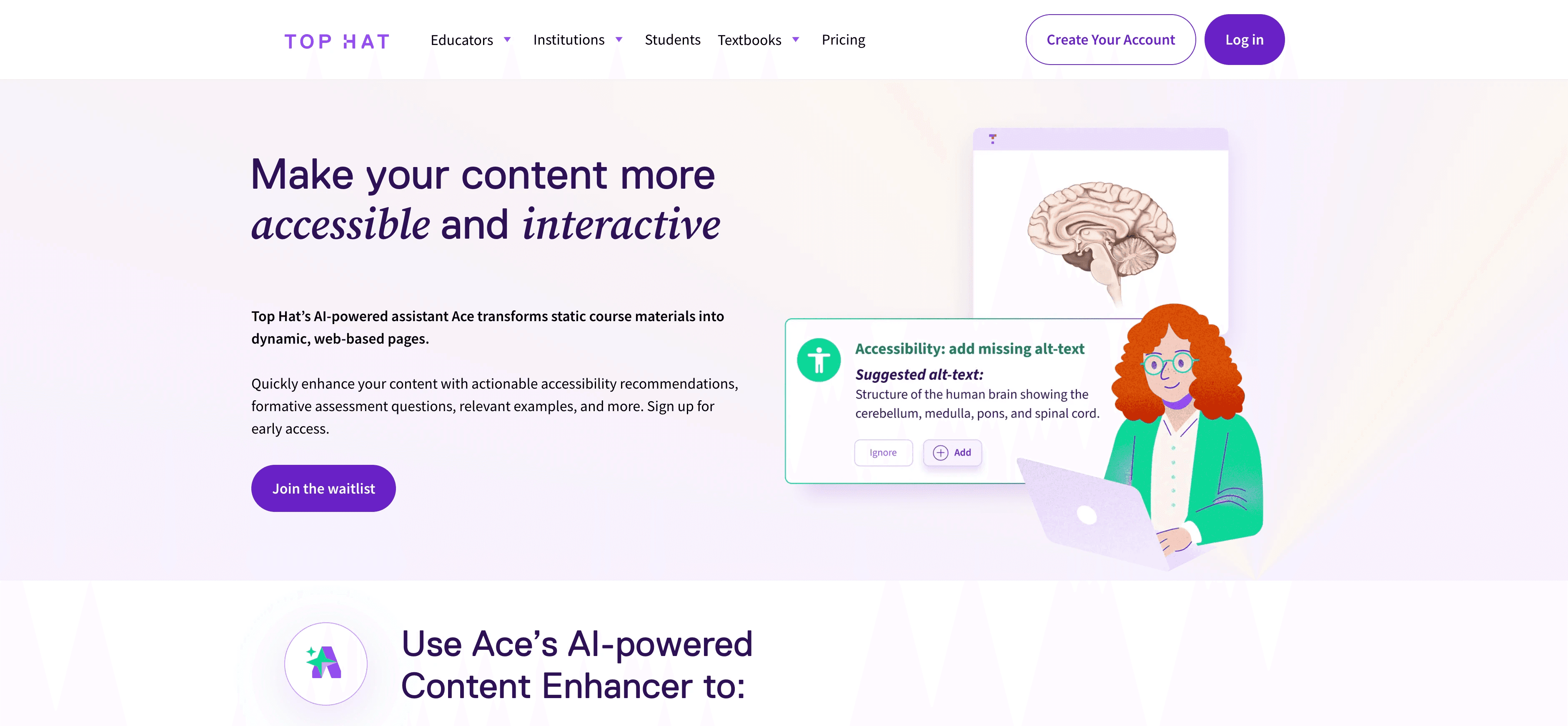
For a long time, I had been pushing for Top Hat to modernize our approach to textbook editing. I felt the technology has evolved a lot and we could adopt a new editing technology called TipTap to accelerate both a core rebuild and product innovation.
I ended-up coding a working demo of this to demonstrate to others which later become the foundation of a larger initiative to actually do this work.
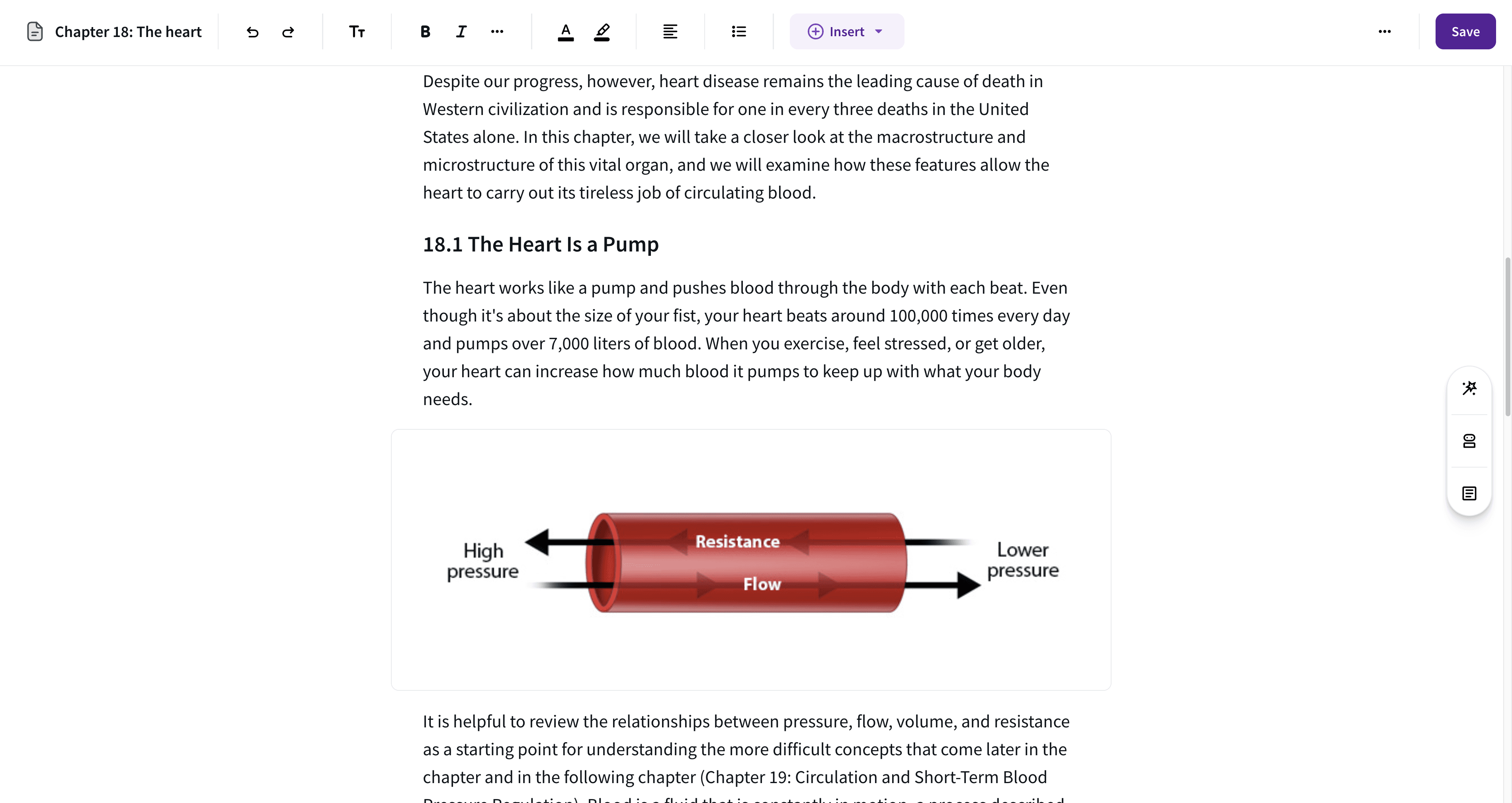
The previous editor (pictured below) was really starting to show it's age. It was hard to develop on-top of and clunky for most users to use.
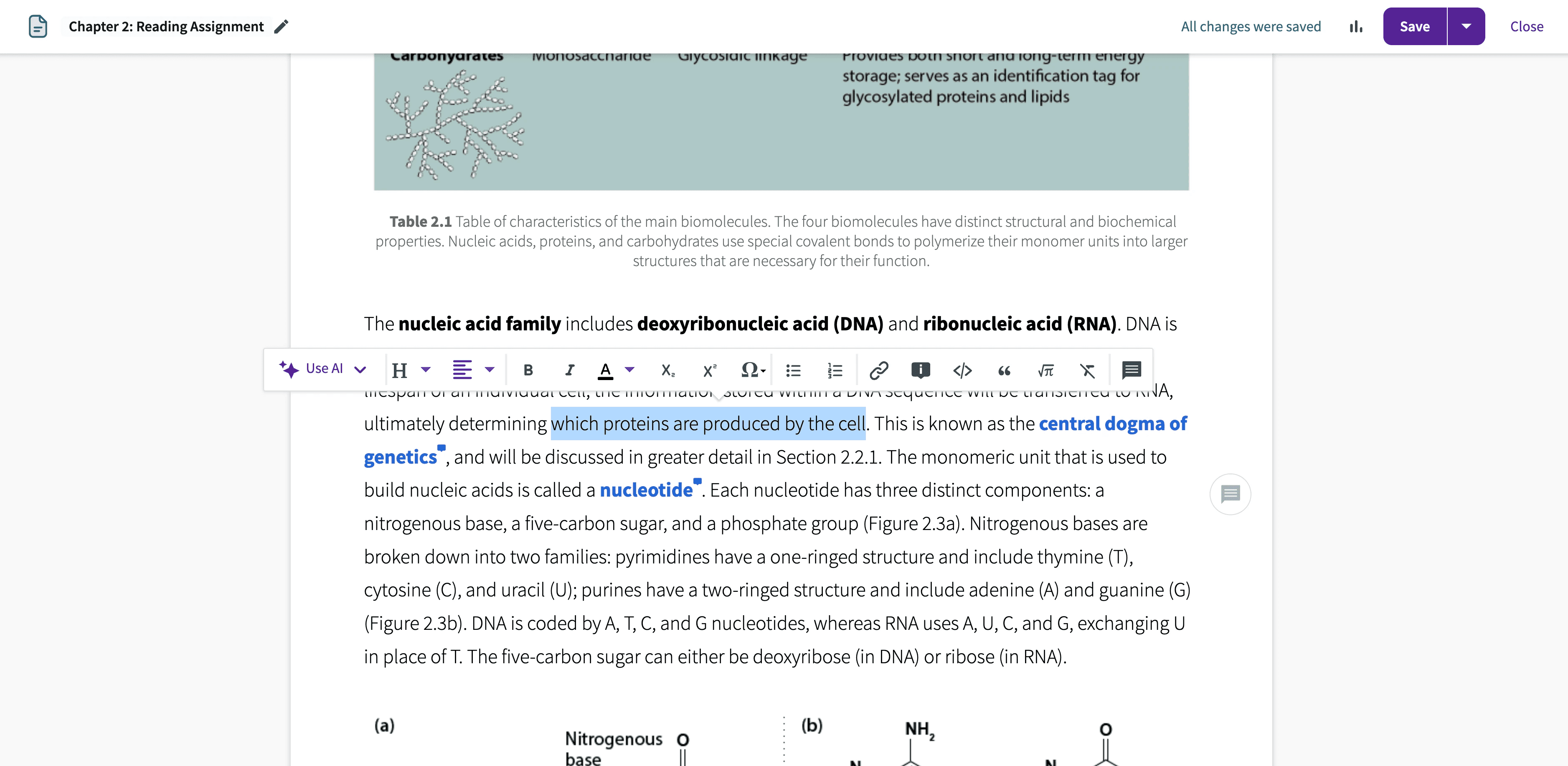
One of the first demos I put together was something very similar to Notion's editing features that allowed for realtime refinement of content. You could simply highlight what you wanted to change and see a Git-style diff printed out right in-front of you.
These were the sorts of features we'd need this new foundation to be able to build effectively.
Another opportunity was providing rule-based feedback systems. In this first example, a user can get LLM-based proof-reading suggestions on their content and visually accept or reject them.
I also took this a further with accessibility suggestions for things like missing alt text in images or poorly constructed headings. This ended up being one of the killer use-cases for professors as document accessibility requirements were ramping up at many major US schools.
In the middle of the project, Top Hat has its yearly hackathon. I was eager to use this foundation to explore what agentic editing might look like in this new system. I managed to get a rudimentary version of TipTap's agent extension working and demoed it live on-stage.
The project ended-up being one of the winners of the hackathon which I am proud of.
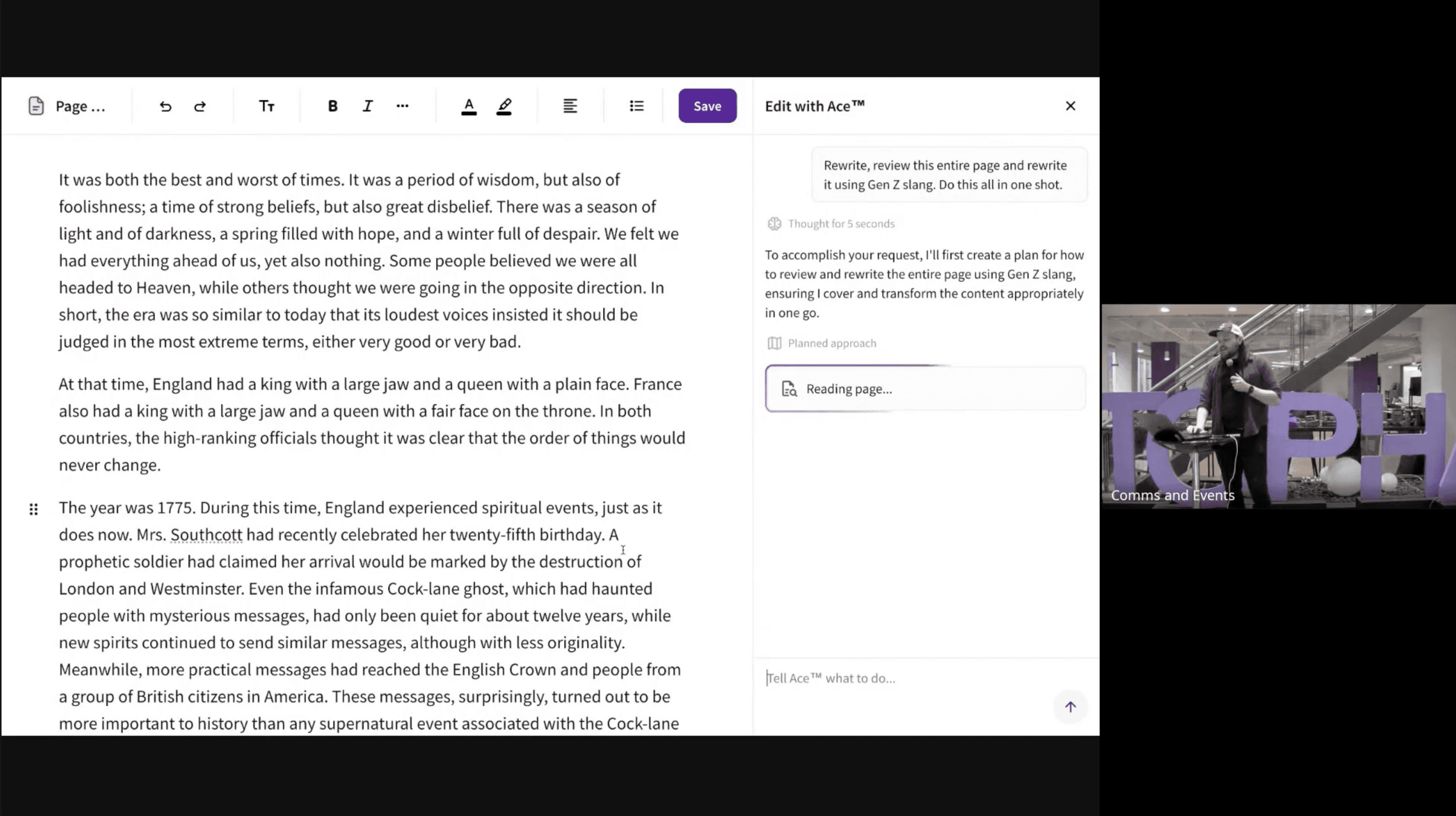
This prototype eventually evolved into a full product suite we call Ace Content Enhancer which we launched in late-2025. The work has evolved since then, but many of the design foundations came from these prototyping explorations I had a chance to put together early in the process.